About Camstrand
Camstrand sells one camera strap in seventeen models. Two of them are woven cotton with leather tabs. Fifteen are braided nylon rope with metal ends. They cost the same, and that is on purpose.

Ivan Petrić shoots weddings and street, mostly on two bodies at once, which is how he ended up with opinions about straps. He runs Camstrand's test bench and has replaced more failed strap hardware than he would like to admit. He writes every page on this site.
Ivan is the only author here. If a page carries a byline, it is his.
The strap is the part nobody budgets for
People spend months choosing a body and a lens, then carry both on whatever loop came in the box. That loop is usually the manufacturer's logo printed on nylon, sized for a showroom rather than a ten-hour day. It works until it does not. The failures Ivan has watched at weddings are boring and repeatable: a plastic clip that opens under a sideways pull, a stitched loop that frays where it rubs the lug, a strap so short that the camera sits at chest height when what you want is your hip.
None of that needs an expensive fix. It needs a strap that is the right shape for how you carry, with metal or leather where the load actually sits. That is the whole idea behind Camstrand, and it is why the catalogue is deliberately small: one strap, seventeen finishes, no accessory range built to pad an order.
Why two ranges that have nothing in common
The two ranges are not two price tiers. They are two answers to the same question, and photographers split roughly down the middle on which one they want.
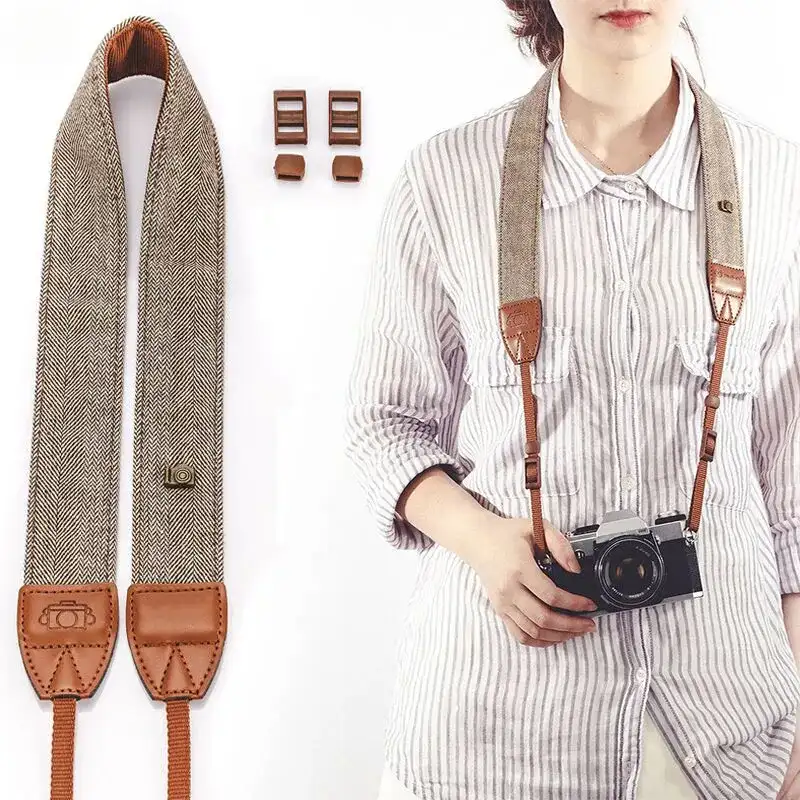
The cotton and leather range is a wide woven band, chevron weave, with leather ends and tabs that close with a snap. It spreads the load across the neck, it looks right on a film body or a retro-styled mirrorless, and it is the range buyers describe as classy. It is also the range with a published load figure: the published load sheet prints 6.6 lb (3 kg) on a single lace and 22 lb (10 kg) with both leather tabs closed. That figure belongs to the cotton range only, and we never quote it for the rope.
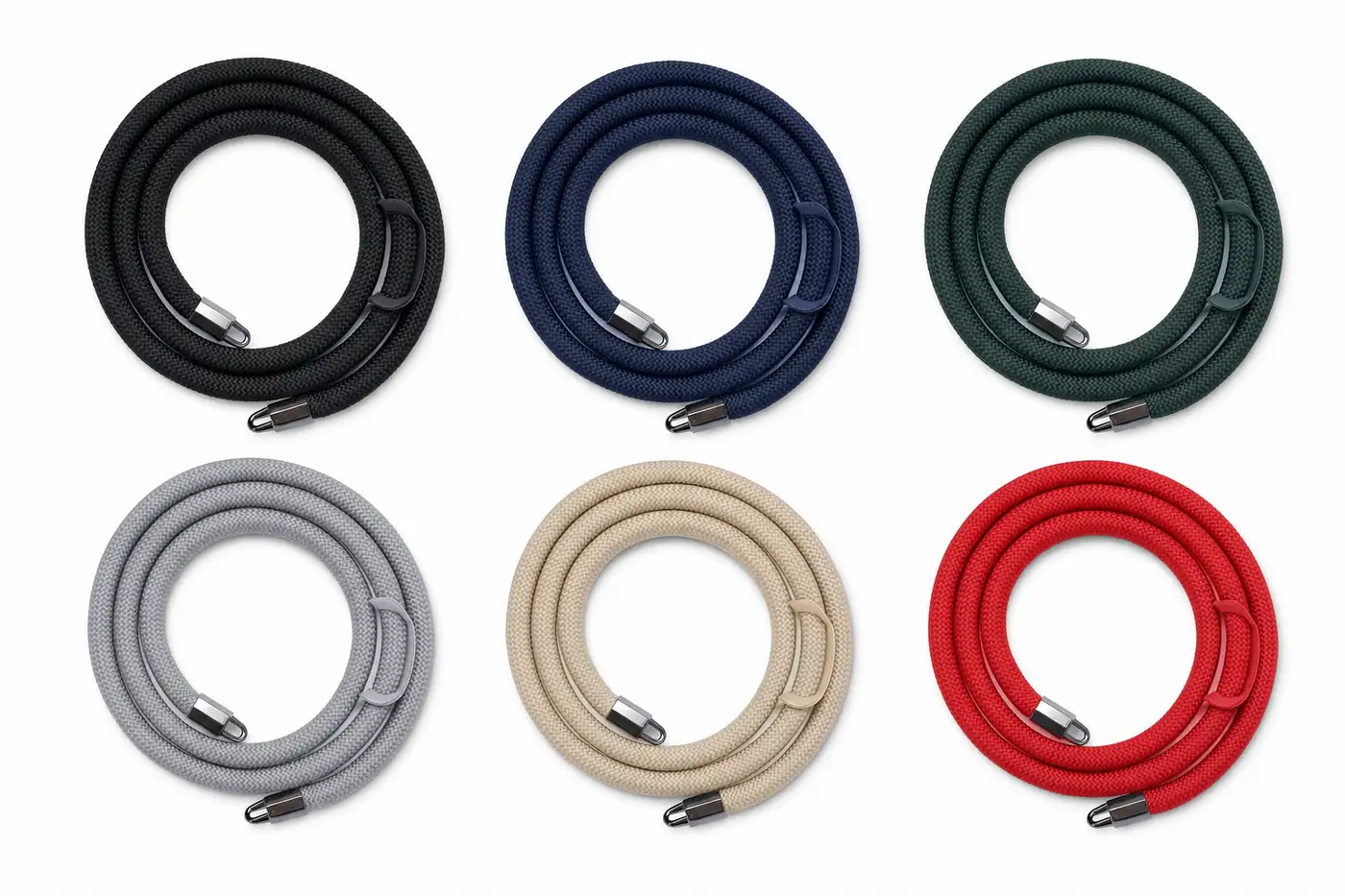
The braided rope range is the opposite object. A round nylon cord, metal buckle and ends, and a ring system with a quick release, so the cord comes off the body without unscrewing anything. It ships with a mounting kit: two loop laces, two flat perforated tabs, three split metal rings. It suits a small mirrorless worn cross-body, and it comes in fifteen colors because a rope strap is a visible thing and people care what color it is.
Neither range is the upgrade. A wedding shooter carrying a heavy body all day and a street photographer carrying a compact want genuinely different straps, and pretending one of them is the premium version would only push people toward the wrong one.
Why they cost the same
One price for a single strap, whichever of the seventeen you pick. Charging more for the cotton because it looks more expensive would be a pricing trick rather than a reflection of what the thing costs to make. The two ranges land within cents of each other, so they sell for the same amount and the choice stays about how you shoot instead of what you can justify.
The second reason is practical. Plenty of buyers own two bodies and want two different straps, which is why the two-strap option lets you mix ranges rather than forcing you to double up. If the prices differed, that option would need tiers, and tiers would need explaining.
What we are, and what we are not
Camstrand curates two production lines, sells them under its own name and ships them to you. We control which models we list, what we say about them, and what happens when something goes wrong.
The 6.6 lb and 22 lb load figures come from the published load sheet, and we label them that way every time. The catalogue is deliberately narrow: seventeen two point straps for neck and shoulder carry, one price, which is the carry our comparison of carry systems takes apart hour by hour.
How we handle reviews
The rating on this site is 4.8 out of 5 from 259 ratings, and the reviews page explains exactly which counters that adds together and which larger, easier number we refused to use. The written reviews are quoted word for word, typos included, and the buyer photographs are. The how we test page sets out what we did with those 119 written reviews and what we could not check.
If any of it is wrong, tell us. The contact page reaches Ivan directly and we reply within 24 hours. Every order carries a 30-day money-back guarantee, set out in the refund policy, and the countries we ship to are listed by name in the shipping policy. To see the seventeen models together, start from the home page, read the guide on choosing between the two ranges, or look at how each one hangs on the neck strap and shoulder strap pages.