Neck strap, wrist strap or harness
Updated on
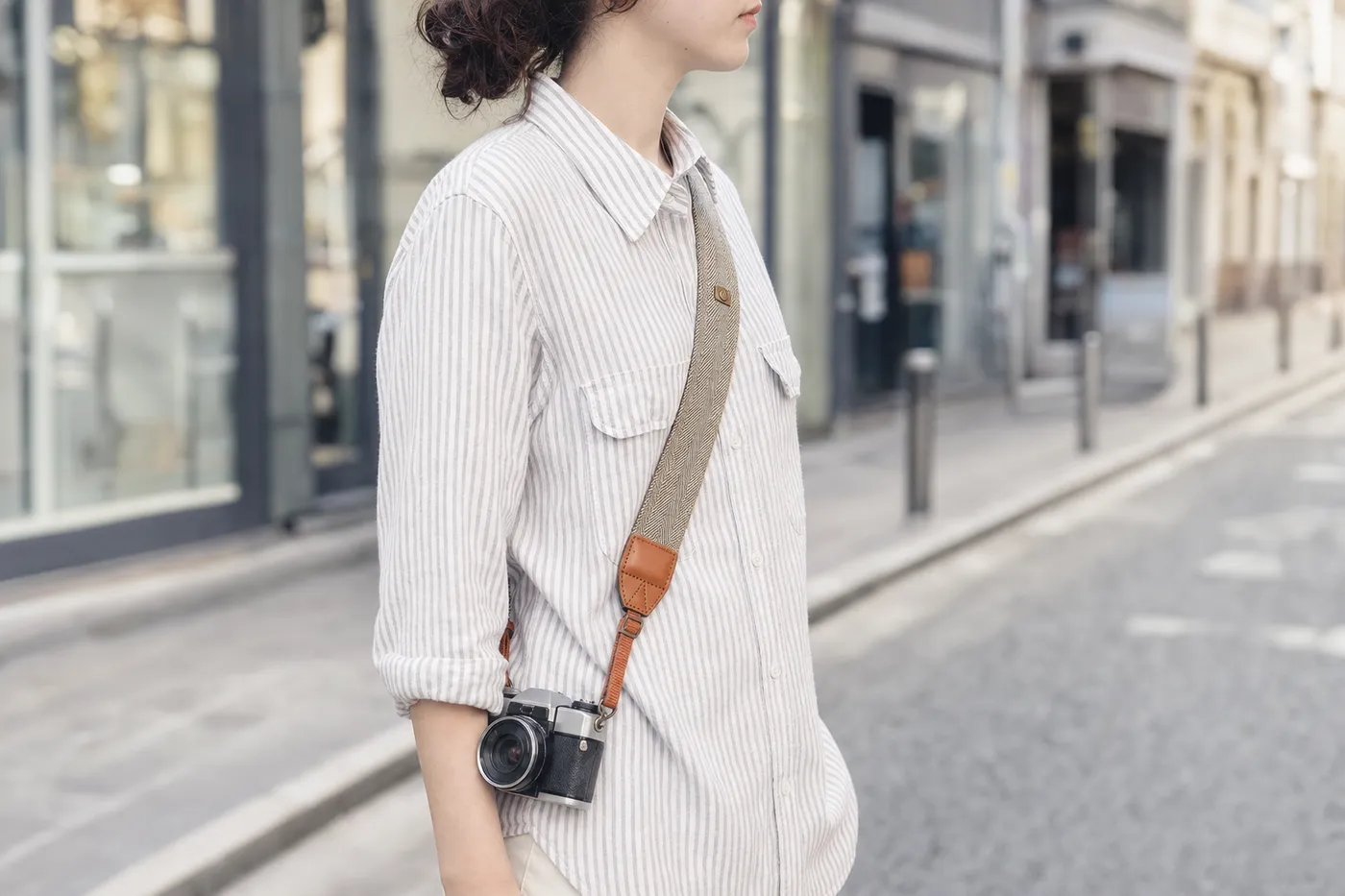
Three ways of carrying a camera, and each one has a set of days where it is clearly the right answer. The mistake people make is treating this as a ranking. It is not a ranking. A wrist strap on a twelve hour wedding is a slow injury, and a harness on a Sunday walk with one small body is theater.
I shoot on two bodies most working days, so I have used all three seriously rather than as an experiment. What follows is what each one actually does to your hands, your shoulders and your shooting speed, and which days each one owns.
Read this first. Camstrand builds one thing and builds it seventeen ways: a two point strap for neck and shoulder carry. This page measures all three systems on the criteria that decide a day — where the load sits, whether your hands stay free, and how fast the camera reaches your eye.
The quick verdict
Most photographers need the first one and buy it once. A smaller group genuinely needs the third and knows it within one long day. The wrist strap sits in the middle as a deliberate minimalist choice rather than a compromise.
Neck and shoulder carry
The reason this format survived everything is that it does not commit you to a posture. Worn short, the camera sits high on the chest and stays out of the way in a crowd. Worn long and across the body, the load moves to one shoulder and the camera rides at the hip, which is easier on the neck over hours. Same strap, two very different days. That is what our neck strap and shoulder and crossbody pages describe in more detail.
The one thing to manage is that a strap worn around the back of the neck concentrates load in a single place. If the camera hangs there all day without moving, you will feel it. The fix lives in the same strap: wear it cross body and shift sides when you notice, which takes a second and costs nothing.
of camera operators surveyed reported shoulder symptoms, the highest rate of any body part
— Annals of Occupational and Environmental Medicine, study of 166 camera operators, 2015
That study looked at broadcast camera operators rather than stills photographers, and their loads are heavier than ours. The pattern is still worth knowing. When people who carry cameras professionally report pain, the shoulder is where it shows up first, and how you distribute the load matters more than what the strap is made of.
Wrist straps and what the committed hand costs
I use one for street work on a small body when I want to look like a person holding a camera rather than a person carrying equipment. The camera never leaves the hand, so it is always ready, and there is nothing swinging into door frames. The cost is that your shooting hand is committed. Paying for coffee, climbing something or holding a light all become a two step operation.
There is a safety point people underrate. A wrist strap only protects against a slip out of the hand. It does nothing at all if you set the camera down on a wall and walk away. A neck or shoulder strap fails differently, and usually more forgivingly.
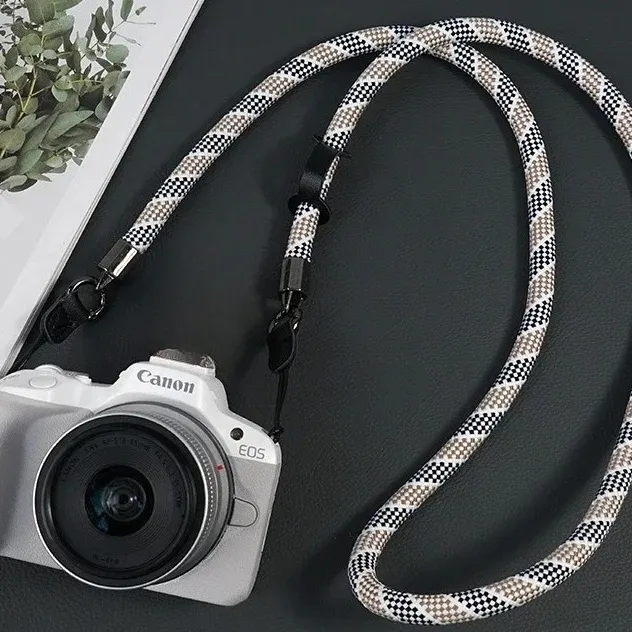
Worn short, a two point strap covers a good part of the same ground. The camera sits high on the chest, one hand reaches it in a beat, and both hands come free the moment you let go — which is the trade a wrist loop cannot make. Our braided rope range is the closest thing to it here: a cord that reads as a lanyard from a distance and weighs almost nothing on the chest.
DSLRs shipped in 2025, down about 31% from the previous year as bodies keep getting lighter
— CIPA shipment data, via DPReview, 2026
Bodies are getting smaller and lighter every generation, which shrinks the load any carry system has to handle. On a compact mirrorless the case for a worn frame thins out fast, and a cord that slips through the smallest lug carries the whole body without ceremony.
Harnesses, what the frame buys and what it takes back
On a long wedding day I want the weight on both shoulders and the bodies out of my hands. A dual harness does that, the cameras stay level with the hips, and swapping between them takes a second. It also takes the load off the neck entirely, which is the part that fails first.
The costs are real. A harness is visible, it takes time to put on and take off, and most designs anchor to the tripod socket, which means a plate or a screw under the body. In a wedding ceremony or anywhere quiet, a harness makes you look like crew. For a lot of shooting that is exactly the wrong impression.
typical coverage in a mid range wedding photography package, the day length that justifies a harness
That is the threshold in my experience. Below it, a two point strap worn cross body is comfortable enough and far less trouble. Above it, with two bodies, distributing the load becomes the whole problem, and the photographers who stay on straps run one per shoulder, crossed, then swap sides at the meal break. That is what the two strap option is for, and it costs the same per strap as buying one.
The comparison table
| Neck and shoulder strap | Wrist strap | Harness | |
|---|---|---|---|
| Load sits on | Neck, or one shoulder cross body | The hand and wrist | Both shoulders |
| Hands free | Yes | No | Yes |
| Bodies carried | One | One | One or two |
| Time to put on | Seconds | Seconds | A minute, over a jacket |
| Discretion | High | Highest | Low |
| Needs the tripod socket | No | Sometimes | Usually |
| Swap sides mid day | Yes, in a second | Hand to hand | No, the frame is fixed |
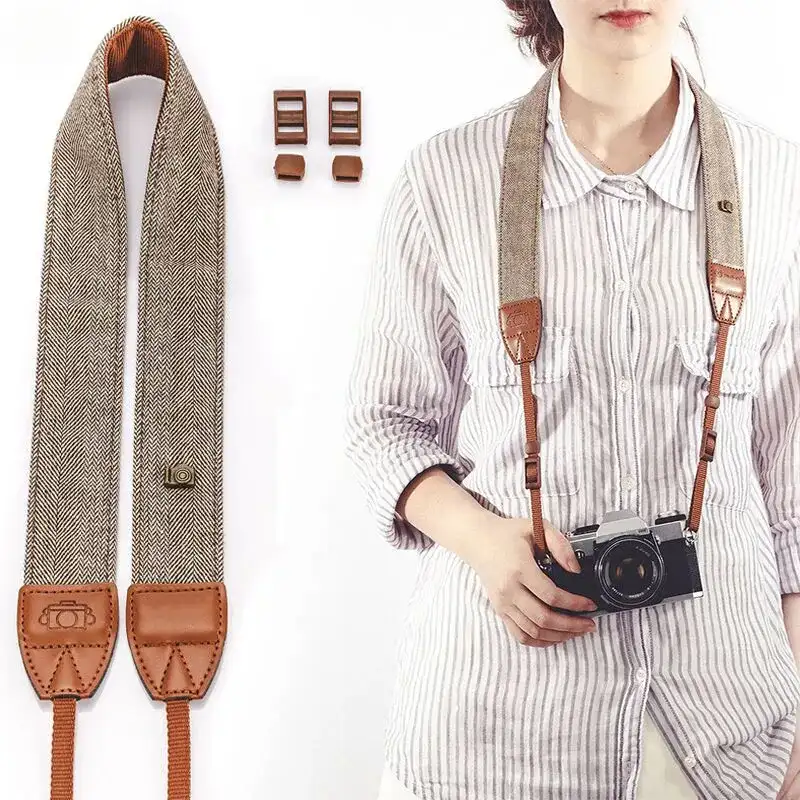
If the table points at the left column, the choice narrows to a wide woven band or a round cord. Our cotton and leather strap holds 6.6 lb (3 kg) on a single attachment cord and 22 lb (10 kg) using both leather tabs on the published test board, while the braided rope range trades that broad surface for a cord that slips through the smallest lug on any body.
What comfort looks like in the feedback. Across the 119 written buyer reviews (July 2026), 14 buyers raised comfort at the neck or shoulder without being prompted, against 67 who talked about build quality. Comfort is a real theme, but it is not the first thing most people notice.
Short answers
Can I use a neck strap and a wrist strap at the same time?
Is a harness better for back pain than a neck strap?
Which is safest if I drop the camera?
If neck or shoulder carry is where you landed, the next question is fit. Start with how to attach a camera strap, check your lugs against the compatibility guide, and read how to pick one before you order. If you expect to take the strap off for tripod work, the quick release explainer is the relevant one.
The range sits on the home page. Buyer feedback is on the reviews page, our bench method is on how we test, the rest of the guides are on the blog index, and the people behind it are on the about page.