How to choose the best camera strap
Updated on
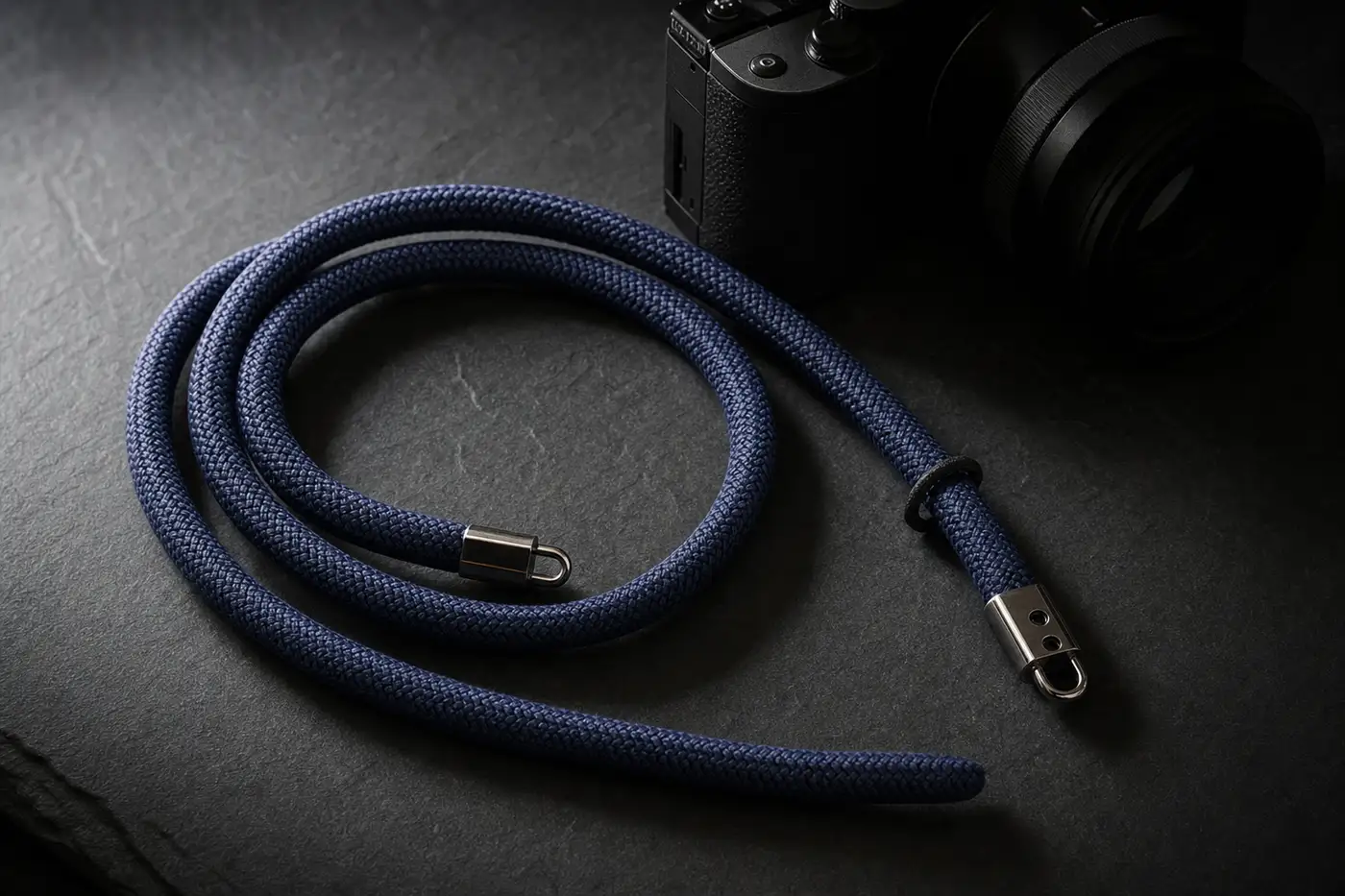
Every list of the best camera straps is really a list of the straps somebody could get a sample of. Rank them however you like and you still have not answered the question the reader arrived with, which is not what is best in general but what is right for the camera sitting on their desk and the way they actually shoot.
So this is not a top ten. It is the four questions I ask when someone hands me a body and asks what to put on it, in the order that matters, with a scoring table at the end you can fill in for yourself. Two of the four answers will point you away from us, and the page says so where that happens.
The four criteria that decide it
Notice what is missing. Price is not on the list, because the useful range for a strap is narrow and the difference between the cheapest and the most expensive is mostly branding. Neither is a load rating, because most makers do not publish one, and a number without a test method behind it is decoration.
projected growth of the camera accessories market between 2024 and 2034
— Precedence Research, camera accessories market report, 2025
That growth is why the choice feels harder every year. More options is not more clarity. It just means more pages telling you their strap is the best one.
Start with what you are hanging
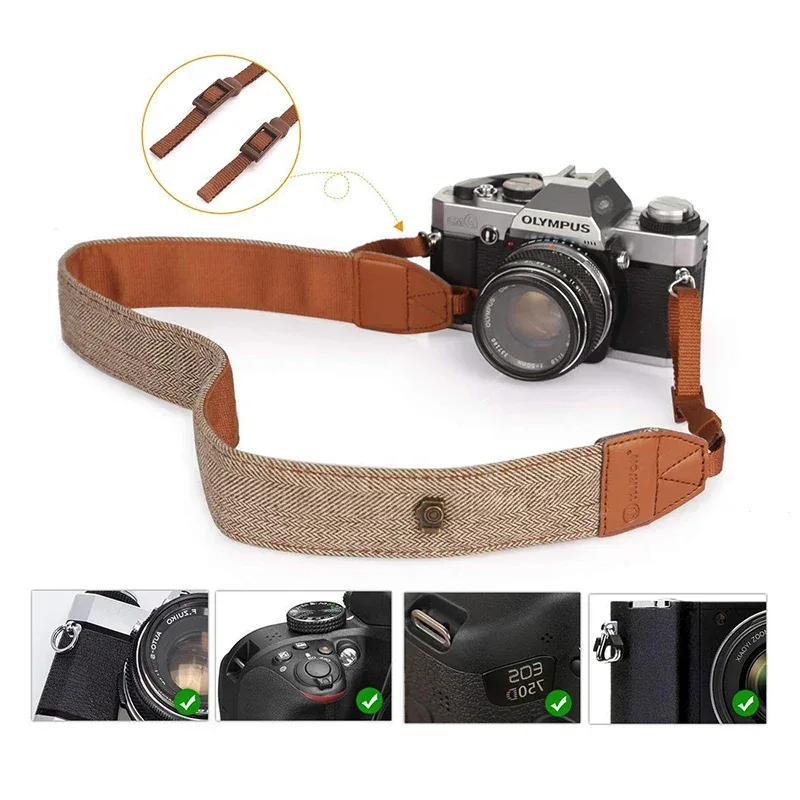
This is the only criterion where physics rather than taste is doing the work. Load spread across a wide surface presses less hard at any one point. That is why the classic wide woven band survived decades of alternatives, and why a round cord on a heavy setup is a compromise you feel at the top of the shoulder.
The counterweight is fit. A wide band needs a lug that will accept its full width, and on small bodies that is not a given. If your camera has narrow slots, the cord is not a compromise. It is the only option that goes through the hole. Our compatibility guide walks through how to read your own lugs.
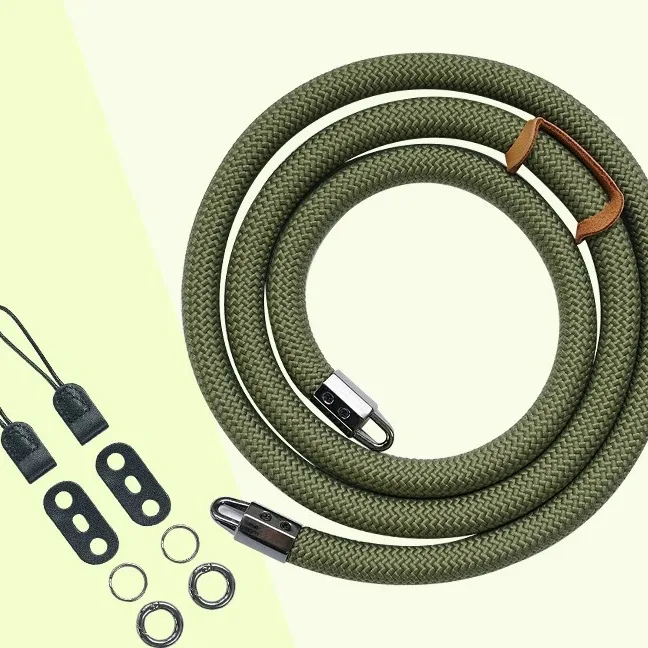
Our cotton and leather strap is the wide band answer, and it has a published measured hold of 6.6 lb (3 kg) on a single attachment cord and 22 lb (10 kg) using both leather tabs. Those figures cover the cotton range only. Our braided rope range trades that broad surface for a cord that slips through the smallest lug on any body.
Then how long you wear it
Duration is the criterion people underestimate, because you cannot feel it in a shop. A strap that is perfectly pleasant for twenty minutes can be the reason you leave the camera in the bag at hour five. The practical test is not how it feels when you put it on. It is whether you still forget it is there after lunch.
If your day runs long on two bodies, our carry comparison works through how a two point strap behaves hour by hour, and how photographers run one strap per shoulder when both bodies stay on them.
median hourly wage for photographers in the United States in May 2024
— U.S. Bureau of Labor Statistics, Occupational Outlook Handbook, 2025
Working photographers are not buying accessories on a boutique budget. That is worth remembering when a review ranks straps by price and calls the most expensive one the best.
Material and how visible you want to be
Discretion is a real criterion and nobody puts it in a specification table. On a busy street a wide branded band announces equipment. A colored cord reads as a lanyard. I shoot both, and the days I choose the cord are the days I would rather not be the person with the camera.
On material behavior, cotton softens with use and holds a shape once it has learned your shoulder. Braided nylon does not soften much. It stays slick, and it sheds a spill instead of drinking it. Leather tabs and metal ends both age visibly, which some people like and others do not.
Color is where our range spends its variety: two cotton models and fifteen rope models across solids and two tone marls. That is a preference decision, not a performance one, and it comes after the first three questions are settled.
The scoring table
| Your situation | Wide woven band | Braided cord |
|---|---|---|
| Larger body with a fast zoom | Better | Workable |
| Small mirrorless or compact | Check lug width | Better |
| Narrow slot lugs | Often will not fit | Fits |
| Worn for several hours | Better | Workable |
| You want to be unnoticed | Workable | Better |
| You detach for tripod work | Stays threaded | Comes off at the ring |
| Two bodies, full working day | One per shoulder, crossed | Lighter to double up |
What buyers actually rate. Across the 119 written buyer reviews (July 2026), 67 mentioned build quality or sturdiness, 43 mentioned looks or color, 21 mentioned value for money and 14 mentioned comfort. Not one review complained about slow delivery. Appearance ranks higher in real feedback than most buying guides admit.
openings for photographers projected each year in the United States through 2034
— U.S. Bureau of Labor Statistics, Occupational Outlook Handbook, 2025
A steady stream of people arrive at this question every year with a first serious body and no idea what to hang it from. If that is you, work through the four criteria in order and ignore the rankings. The strap that fits your camera, your hours and your temperament is the best one, and it is rarely the one at the top of a list.
Short answers
What does a more expensive camera strap actually buy you?
Should I keep the strap that came with my camera?
How many straps do I actually need?
Next steps depend on where you landed. For fitting, read how to attach a camera strap. For lugs, read the compatibility guide. For detaching, read the quick release explainer. For carry position, read the carry comparison.
Product pages by carry style: neck strap and shoulder and crossbody strap. The full range sits on the home page, buyer feedback is on the reviews page, our method is on how we test, the guides are indexed on the blog, and the team is on the about page.