Camera wrist straps: when they beat a neck strap
Updated on
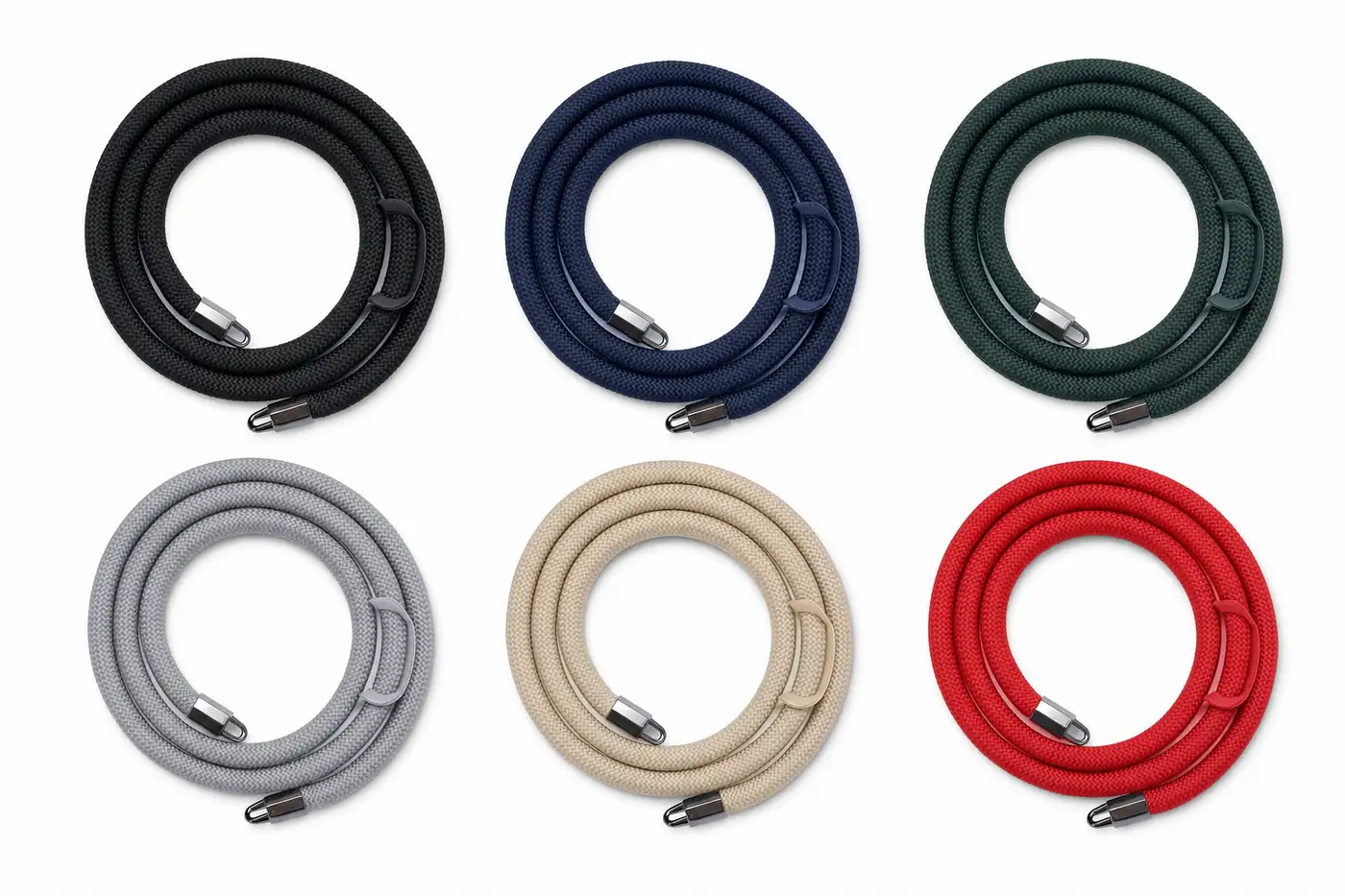
The wrist strap is misjudged in both directions. People who dismiss it have never walked a city for an hour with one small body and nothing across their chest. People who swear by it have not carried a camera through a nine hour day on one. Both groups describe real days — just different ones.
I keep a wrist strap in the bag and reach for it maybe one outing in five. This guide covers the strap itself: its shapes, its anchors, what it protects against, and where it stops being the right tool. The wider neck against wrist against harness question lives in the three way carry comparison.
Read this first. Camstrand builds one thing and builds it seventeen ways: a two point strap for neck and shoulder carry. This page looks at the wrist strap on its own terms: where it is the right call we say so, and where it runs out we name which of our straps takes over.
The quick verdict
That sentence settles most cases. The part it hides: a wrist strap is not a smaller neck strap, it is a different contract — total readiness in exchange for a permanently occupied hand. Everything below follows from that trade.
The three shapes of wrist strap, and how each one anchors
The cord loop is the lightest and the most common: a braided cord through one strap lug, a loop around the wrist, a slider that cinches it so the loop cannot open past your hand. It packs to nothing. The flat band is the same idea with more surface — it presses less on the wrist when the camera hangs for a moment, and takes more pocket in exchange.
The cuff is the committed version. It fastens around the wrist first, like a watch, and connects to the camera by a short leash, usually into the tripod socket through a small plate. Most secure hold, most setup: a plate lives under the body, putting the cuff on is a two hand job, and tripod work now competes for the same socket.
Anchoring is where buyers get caught. A lug mounted loop needs a lug, and lug shapes vary more than people expect — our compatibility guide reads the three common types in a minute. A socket mounted cuff takes the socket instead.
Where a wrist strap wins the day
The case rests on three things. Readiness: the camera is already in your shooting hand, no lift from the chest, no strap sliding off a jacket shoulder — for street work, where the picture exists for two seconds. Discretion: a camera held at the hip on a loop reads as casual in a way nothing worn across the body does. And comfort: nothing on the neck or chest, nothing to sweat under in summer.
interchangeable lens cameras shipped in 2025 were mirrorless, roughly nine in ten
— CIPA shipment data, via DPReview, 2026
That number is why the wrist strap era is now: the small mirrorless bodies most people are buying sit comfortably in one hand for an hour with a compact prime.
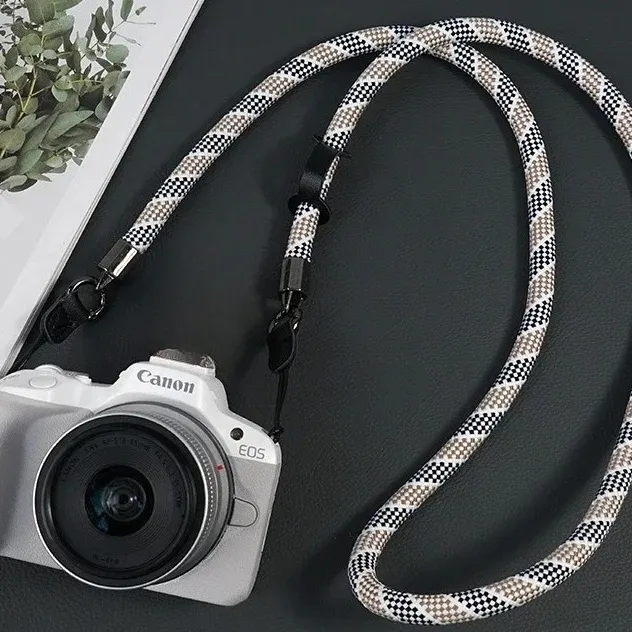
If this profile is yours but you want your hands back between frames, the closest thing on our bench is the braided rope range: a cord that reads as a lanyard, threads the smallest lugs, and weighs so little on the chest that the discretion argument mostly survives — with both hands free the moment you let go.
What a wrist strap protects, and what it only seems to
The catch it makes, it makes completely. A cinched loop means a fumbled camera falls the length of the leash and stops. Wet hands, gloves, cold fingers on a winter morning: the classic slip scenarios are covered, and that catch is the one job the hardware is built to do.
Now the failures it cannot see. A wrist strap is only attached to you while you wear it, and cameras get left on cafe tables precisely when something made you take it off. A two point strap fails differently: taking it off is enough of a ceremony that you notice yourself doing it.
professional photography insurance claims that came from accidental damage, not theft
— Towergate Insurance records, via Digital Camera World, 2014
Accidents, not thieves, are what kills cameras, and most accidents are impacts rather than clean drops. A camera dangling from a relaxed arm swings further than people think. The fix costs nothing: between frames, the leashed camera stays in your grip, not hanging from it.
One more point, because it decides purchases: hardware is only as strong as its anchor. On our bench, the published board for the cotton and leather range holds 6.6 lb (3 kg) on a single attachment cord and 22 lb (10 kg) on both leather tabs — figures for that range alone, measured as described on how we test. Whatever strap you buy, ask for the same kind of number.
The hour limit: where the committed hand starts to cost
This is the limit people discover on holiday. The first hour with a small camera in hand is lovely; by hour four the camera has migrated to the weak hand and you are scanning for a table. Nothing failed — you asked a hand to do a shoulder's job.
Lens weight moves the limit faster than body weight. A compact prime keeps the mass over your palm; a telephoto puts leverage in front of it, so your wrist holds a lever, not a weight. Days that call for longer glass thin the wrist strap argument fastest.
of camera operators surveyed reported shoulder symptoms, the highest rate of any body part
— Annals of Occupational and Environmental Medicine, study of 166 camera operators, 2015
People who carry cameras for a living hurt where the load concentrates; the lesson transfers, not the body part. A wrist is a smaller, less forgiving point than a shoulder, and the answer is the same: spread the load. That is what a two point strap does: worn across the body, the weight lives on a shoulder built for it. Our shoulder and crossbody page covers that carry in detail.
The moments both hands matter more than the camera
This, more than fatigue, is what sends people back to a neck strap. The readiness works in one direction only: the camera reaches your eye instantly, but your hand cannot reach anything else without trusting the dangle or unrigging. Ten interruptions an hour means ten decisions an hour.
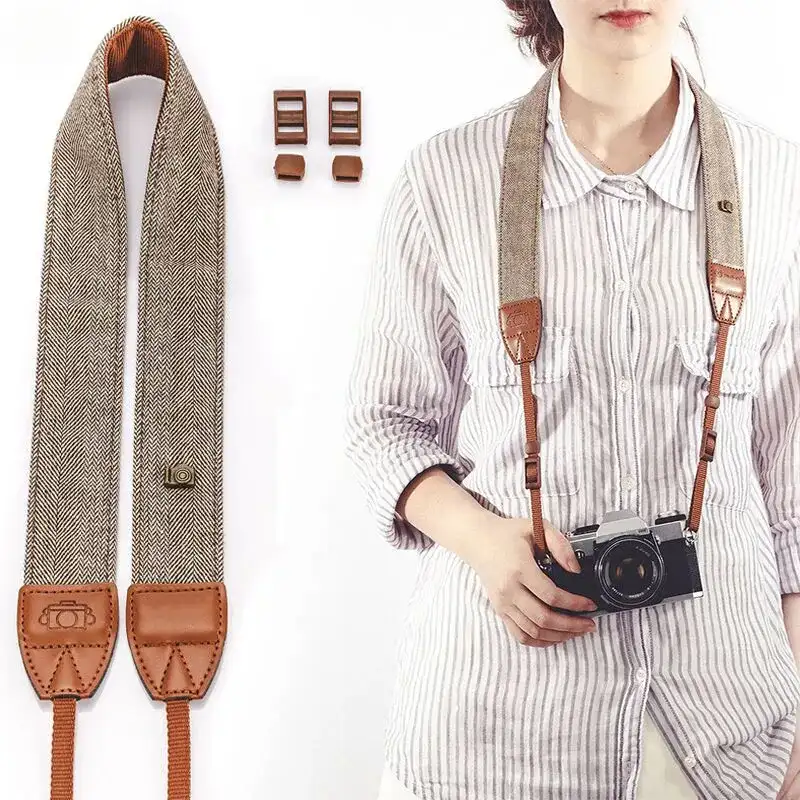
Worn short, a two point strap makes the opposite trade. The camera sits high on the chest, one beat from the eye instead of zero, and the moment you let go both hands are simply free — no ceremony, no decision. The neck strap page covers setting the drop so the body lands where your hand expects it.
And if you want the hand feel of a wrist loop on a strap that also hangs: the slack of a two point strap wraps around the shooting hand in one motion. The technique is in how to use a camera strap — the closest thing to both formats on one piece of hardware.
The outing table: wrist strap or two point strap
| The day in front of you | Wrist strap | Two point strap |
|---|---|---|
| An hour of street, one small body | Its home ground | Also strong, worn short |
| City trip, camera out all day | Fades after the second hour | Built for exactly this |
| Long walk with a telephoto | A lever in one wrist | Weight on a shoulder, hands free |
| Event or wedding, hours on your feet | Not this tool | Cross body, switch sides at the break |
| Errands with a camera along | Every stop is a re-rig | Hangs and waits |
| Gloves, rain, cold fingers | Catches the classic slip | Catches everything both lugs hold |
If your week is mostly the top row, run a wrist strap and enjoy it. If it is any of the other rows, or a mix, start from a two point strap and choose by feel: the wide cotton and leather band for surface and structure on the shoulder, the braided rope for the least strap that still hangs. Between the two formats sit seventeen models, all on the home page.
Short answers
Does a wrist strap fit every camera?
Which hand does a wrist strap go on?
Can I run a wrist strap and a neck strap together?
If the two point side of the table is where you landed, the reading order is short: how to pick a strap to choose the format, then how to attach it once it arrives. Buyer feedback sits on the reviews page, the bench method on how we test, the rest of the guides on the blog index, and the person behind them on the about page.